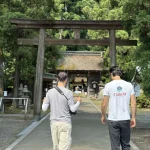

Ask most travelers about Hiroshima and they will describe the same day: the Peace Memorial Park in the morning, the floating torii gate of Miyajima in the afternoon, and a shinkansen out that evening. It is a moving, worthwhile day — and it barely scratches the surface of what this corner of Japan holds. Within a few hours of Hiroshima lie two of the best-preserved castle towns in the country, a sacred mountain shrine wrapped in a tunnel of red gates, and a coastline most Japanese people have never seen, let alone foreign visitors.
If you are searching for “hidden gems near Hiroshima,” here is the honest answer: they are not in Hiroshima city at all. They are north and west, in Hagi and Tsuwano — and they reward every extra day you give them.
Why Everyone Leaves Too Soon
Hiroshima sits on the shinkansen line, which makes it easy to visit — and easy to leave. The bullet train runs east toward Osaka and Kyoto, and west toward Fukuoka, so itineraries treat the city as a stop rather than a gateway. But turn away from the coast and head inland, and the crowds vanish almost immediately. This is the San’in side of western Japan: the “shadow side of the mountains,” facing the Sea of Japan, where the trains are slower, the valleys are deeper, and towns have kept their Edo-period bones intact precisely because the twentieth century was in a hurry and passed them by.
Hagi: The Town That Started a Revolution
Hagi is one of the best-preserved castle towns on the Sea of Japan coast, with one of the most complete samurai quarters in the country. The grid of lanes below the castle ruins looks much as it did two centuries ago — and because Hagi was spared the wartime air raids that erased the old quarters of so many Japanese cities, its Edo-period streetscape survives almost frozen in time, a whole town that feels like an open-air museum: whitewashed walls, wooden gates, and summer oranges hanging over garden walls, the town’s quiet trademark. You can walk for an hour here and meet more cats than tourists.
Two things made Hagi famous among Japanese travelers. The first is Hagi-yaki, a pottery tradition of roughly four centuries whose soft, warm-toned tea bowls are ranked among the finest in Japan; kilns and workshops still fire throughout the town, and several welcome visitors. The second is history: this small, remote town produced a startling share of the young revolutionaries who overthrew the shogunate and built modern Japan in the Meiji Restoration. The modest academy where many of them studied still stands, now part of a UNESCO World Heritage listing.
Tsuwano: The Little Kyoto of San’in
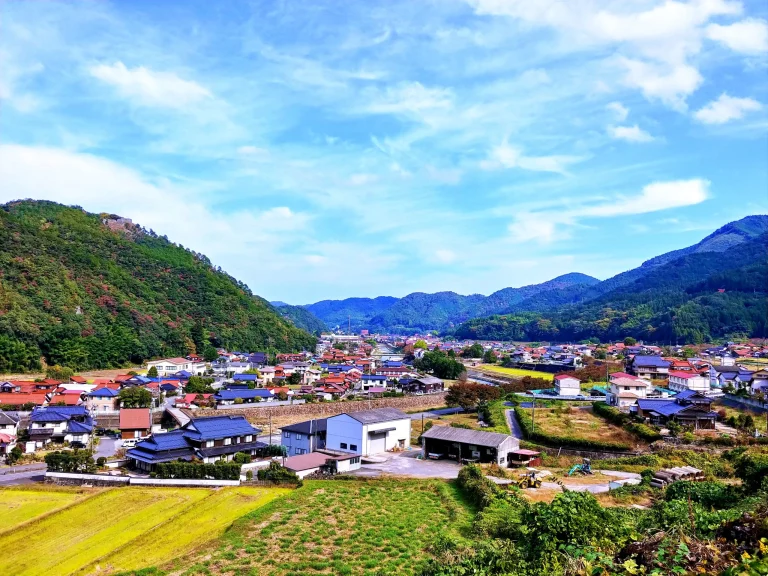
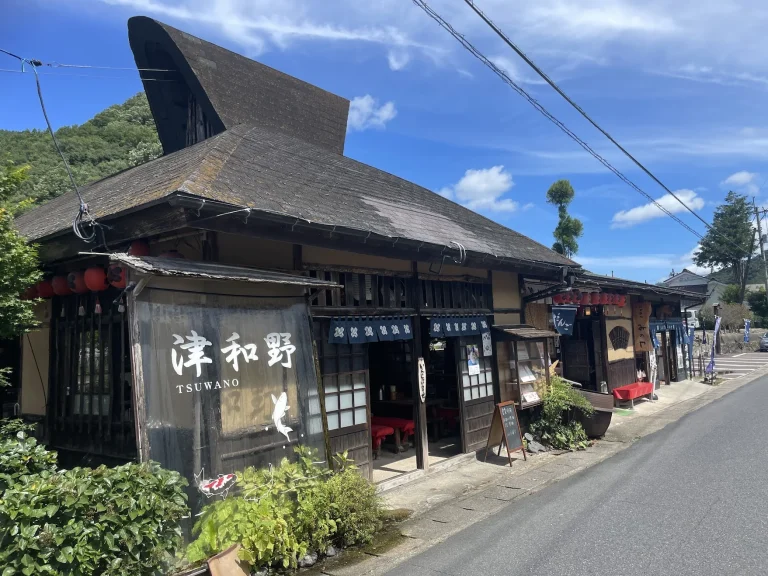
An hour’s drive and two valleys east of Hagi, Tsuwano threads along a single river valley so narrow the whole town is essentially one beautiful street. This is a castle town too — a small jewel of a place, listed among Japan’s Heritage sites. Along Tonomachi Street, thousands of colored carp swim in the canals beside the old samurai residences — descendants, locals will tell you, of fish bred here centuries ago. Above the town, the vermilion shrine of Taikodani Inari clings to the mountainside, reached through a winding tunnel of a thousand red torii gates — like Kyoto’s Fushimi Inari, without the queue for a photograph.
Tsuwano is also the home of the Sagimai, the heron dance: a court ritual in which dancers in white heron costumes perform in the streets each July, passed down here for over four hundred years and now recognized as an Important Intangible Folk Cultural Property of Japan. If your timing is right, it is one of the most quietly otherworldly festivals in the country.
We wrote a full two-part guide to these towns, and a closer look at the Sagimai itself:
Three Ways to Do It
| Option | Time needed | What you get | Best for |
|---|---|---|---|
| A. Classic day trips (Miyajima, Iwakuni’s wooden Kintaikyo bridge) | 1 day each | Famous sights, easy trains, crowds at the highlights | Tight schedules |
| B. Hagi & Tsuwano on your own | 2–3 days | Both castle towns at walking pace; slower rural trains and buses to plan around | Confident independent travelers |
| C. The full western immersion (guided, 10 days) | 10 days | The coast plus hiking the old Hagi Okan highway; the Taikodani Inari–castle ruins–Washibara Hachiman route above Tsuwano; a pottery artisan’s workshop; and the region’s fine hot springs and inns | Travelers who want the deep version, handled |
The Case for Going Deep
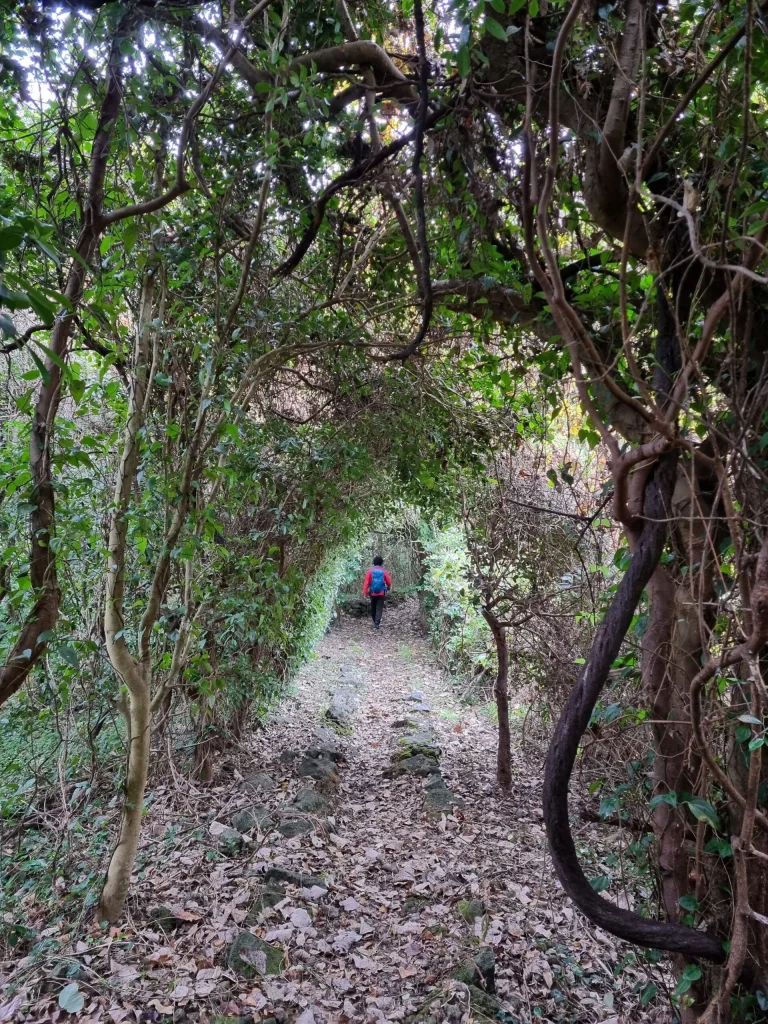
Hagi and Tsuwano are connected by more than a bus line. The old Hagi Okan highway once carried feudal lords and their retinues over the mountains between the castle town and the Seto Inland Sea — the same road along which young samurai, still in their teens and twenties, once hurried off to set a revolution in motion. Stretches of the stone-paved road still run through forest and villages, walkable today and almost entirely empty. Walking a section of it is the difference between seeing these towns and understanding why they are here.
This region is also where independent travel gets genuinely hard: English signage thins out, buses run a few times a day, and the best experiences — a pottery master’s workshop, a fisherman’s table, a mountain village festival — are not bookable online. That is exactly why we built our 10-day journey through Yamaguchi and the San’in coast around local guides and relationships that took years to form.
Ancient Traditions & Untamed Nature — our 10-day Yamaguchi journey, from ¥985,200:
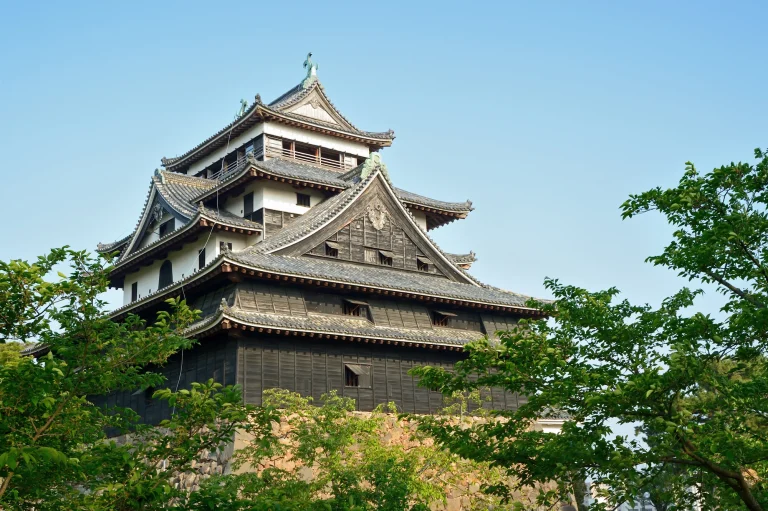
However far you go beyond the Peace Park and Miyajima, go at least one valley further than you planned. Western Japan saves its best rooms for the guests who stay.
Frequently Asked Questions
How far are Hagi and Tsuwano from Hiroshima?
Both are within roughly 2 to 2.5 hours of Hiroshima by rail and road, on the quiet San’in side of western Japan. They are close enough to reach easily — and far enough that the crowds never follow.
Can I visit Hagi and Tsuwano as a day trip?
It is possible to see one of them in a long day, but both towns reward an overnight stay: evening streets lit by lanterns, morning markets, and time inside a kiln or a samurai residence rather than a photo stop outside one. Both Hagi and Tsuwano are also a pleasure to explore slowly by rental bicycle.
What is Hagi famous for?
Hagi-yaki pottery — a tradition of roughly four centuries prized by tea masters — an intact samurai quarter, and its role as the cradle of the Meiji Restoration that transformed modern Japan. The town also fills its calendar with events, from the Hagi-yaki pottery festival to summer fireworks and a kimono week.
When can I see the Sagimai heron dance in Tsuwano?
The Sagimai is performed each July during the Gion festival season, a rite handed down for centuries. Outside festival dates, the town’s heritage center offers context — and our guided journeys time visits to local performances where possible. Tsuwano is also known for the Tsuwano Odori, its own traditional dance.