
Say “Japan in winter” and most travelers picture one of two things: the powder snow of Niseko’s ski resorts, or cherry-blossom daydreams of a spring trip instead. Both miss something. Away from the lift queues, Japan’s snow country — the mountain villages of Nagano, the castle towns of the Alps, the frozen Okhotsk coast of Hokkaido — offers a winter that has nothing to do with skiing and everything to do with silence, steam, and light.
This is the season when Japan is at its emptiest and, arguably, its most beautiful: the air at its clearest, the onsen at their most welcome, and the crowds of spring and autumn nowhere to be seen. Here are five ways to experience it — no ski boots required.
1. Snowshoeing After Dark in Nagano’s Forests
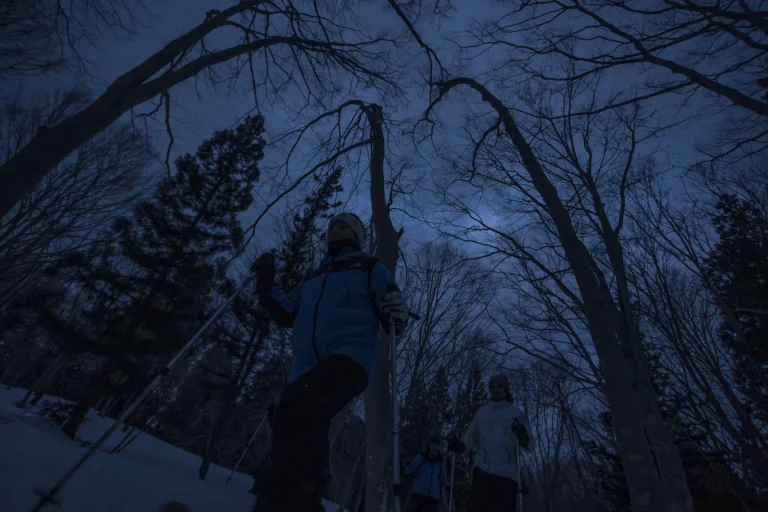
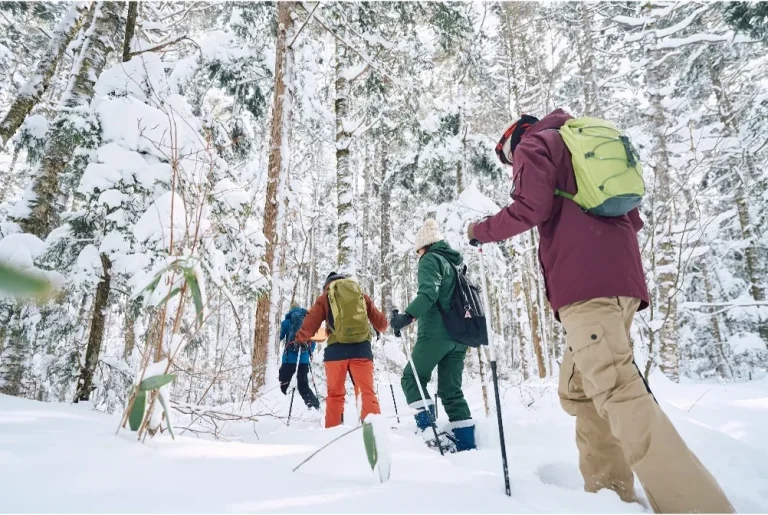
Snowshoeing is winter walking, and if you can walk, you can snowshoe — no technique, no lessons, no falling over. What transforms it from pleasant to unforgettable is doing it at night. Deep in Nagano’s forests, hours after the day-trippers have gone, you strap on snowshoes and follow your guide into woods lit only by moonlight reflecting off the snowpack. The silence of a snow-covered forest at night is unlike anything else: sound itself seems buried. Then the trees open, the valley appears below, and the stars — sharpened by the dry winter air — are the kind you thought only existed in planetariums.
This is our Nagano Snow Adventure: a journey built around that night walk in the forest, from ¥231,100.
2. A Snowbound Onsen Village, the Old Way
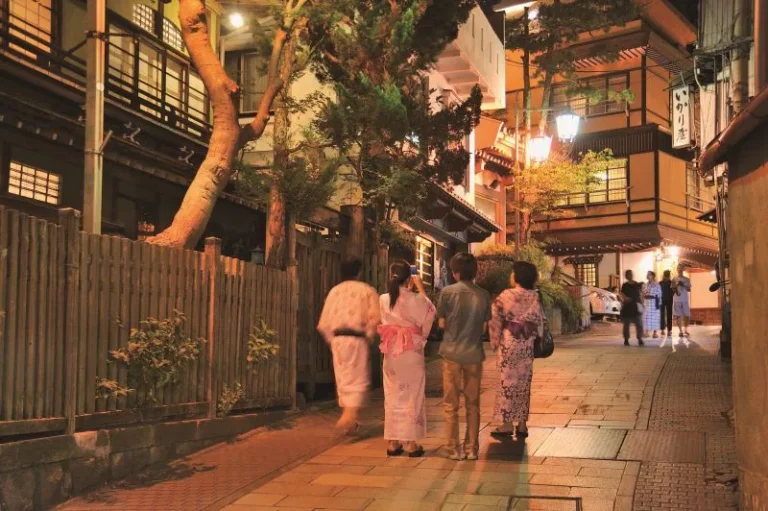
There is a specific pleasure the Japanese language should have a word for: sitting in an outdoor hot spring while snow falls on your head. The mountain villages of northern Nagano have been perfecting the experience for centuries — wooden inns, lantern-lit lanes, and mineral-rich baths that steam against the cold. Staying overnight in a traditional onsen town in deep winter means kaiseki dinners of mountain vegetables and river fish, futons laid out on tatami, and the particular quiet of a village where the snow piles higher than the postboxes. It is the least strenuous adventure we offer, and for many guests, the most memorable.
3. Castles, Sake, and Snowshoes: Matsumoto in Winter
Matsumoto Castle — Japan’s oldest surviving keep, black-walled and six stories tall — is striking in any season. Against fresh snow, with the Northern Alps floodlit white behind it, it is the single best castle view in the country. Winter is also the season of sake: the cold months are when Matsumoto’s centuries-old breweries press their new batches, and tasting rooms are at their liveliest. Pair the culture with a day of snowshoeing on the slopes of Mount Norikura, and you have a winter journey that alternates perfectly between exertion and reward.
4. Drift Ice: February’s Three-Week Miracle
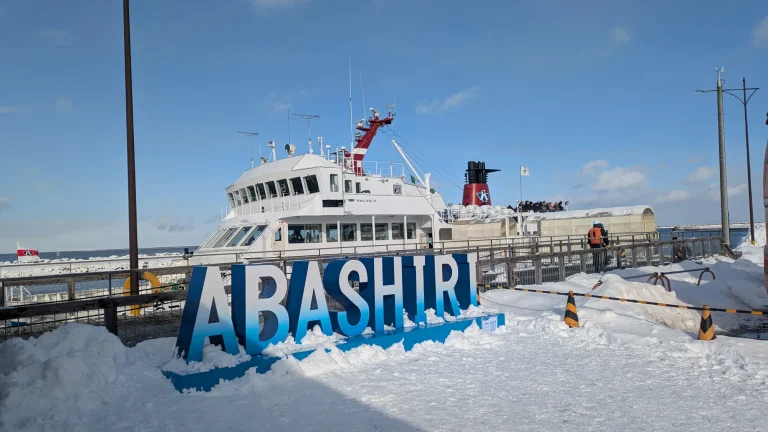
Every winter, the Sea of Okhotsk performs a trick seen almost nowhere else on Earth at this latitude: it freezes, and the ice comes to Japan. Vast sheets of drift ice — ryuhyo — form off the Siberian coast and float south until they press against the shores of Abashiri in eastern Hokkaido, usually arriving in late January and peaking through February. Icebreaker ships crunch through the white expanse; Steller’s sea eagles, the largest in the world, patrol the floes; and for a few weeks the sea itself becomes a landscape you can watch, hear, and — on a guided ice walk — stand on.
Then, in March, it melts, and the show is over until next year. If any experience in Japan justifies planning a trip around a date, it is this one — our five-day Abashiri journey runs on fixed February dates, from ¥381,400.
5. Hokkaido’s Winter Wilderness on Snowshoes
If Nagano’s snow country feels remote, Hokkaido’s is another order of wild: silver birch forests, frozen marshland, fox and deer tracks stitched across untouched snowfields. A multi-day snowshoe journey here is winter Japan at full strength — big landscapes, big appetites, and evenings thawing out over Hokkaido’s legendary seafood and ramen. It is the choice for travelers who want their winter trip to feel like an expedition, without giving up a warm bed at night.
Five Winters, Side by Side
| Experience | Region | Days | Physical level | From | Season window |
|---|---|---|---|---|---|
| Night snowshoeing | Nagano | 3 | Easy–moderate | ¥231,100 | Jan–Feb |
| Onsen village stay | Nagano | 3 | Easy | ¥189,000 | Late Jan–Feb |
| Matsumoto & Norikura | Nagano / Alps | 4 | Moderate | ¥386,200 | Dec–Mar |
| Drift ice & wildlife | East Hokkaido | 5 | Easy–moderate | ¥381,400 | Feb only |
| Winter wilderness snowshoe | Hokkaido | 4 | Moderate | ¥399,000 | Jan–Mar |
| Private winter escape | Nagano | 3 | Flexible | ¥255,500 | Jan–Mar |
The Practical Part: Cold, Clothing, and Timing
How cold is it, really? Colder than you expect, and more comfortable than you fear. Daytime temperatures in the Nagano mountains typically sit a few degrees below freezing; eastern Hokkaido in February can reach minus ten or lower. But Japanese winter travel is built around warmth — heated trains, kotatsu tables, onsen at the end of every day — and the cold is dry, which makes it far more pleasant than the damp chill of a European winter.
What to pack: proper layers (merino base, insulated jacket), waterproof boots, gloves, and a hat. Snowshoes and other technical equipment are provided on all of our winter journeys — you bring the warm layers, we bring the rest.
Why winter is the underrated season: Japan hosted record numbers of visitors last year, but almost all of them come between March and November. In winter you will have temples, trails, and entire villages nearly to yourself — with the sharpest mountain views of the year, because cold air is clear air.
The same holds beyond the northern mountains. The Kiso Valley stretches of the Nakasendo (Magome–Tsumago, Yabuhara–Narai) and the Nakahechi and Iseji routes of the Kumano Kodo — impossibly crowded and hard to book in spring and autumn — are open and quiet in winter. If authenticity matters to you, the season deserves a place on your shortlist. Neither the Nakasendo nor the Kumano Kodo gets deep snow, so you can generally walk them without special equipment — though the Nakasendo occasionally sees heavy snowfall, so it is worth carrying chain spikes just in case.
One deadline worth knowing: the drift ice journey runs on fixed February dates to match the ice itself, and applications close around 30 days before departure. If the ice is calling, plan by early winter — February in Abashiri does not do second chances until next year.
Choose Your Winter
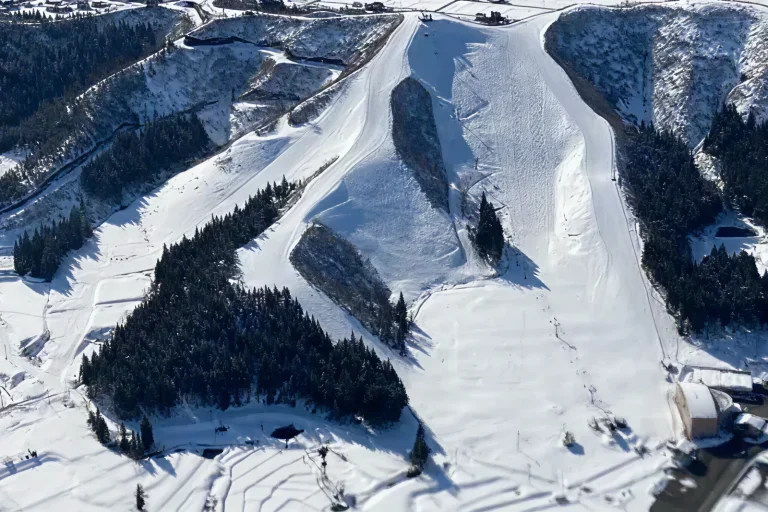
Every journey below runs small — private or near-private — with local guides, inns chosen for warmth in both senses, and all winter equipment included. Even the “escape” for those who do want a quiet slope to themselves, far from the resort crowds:
Nagano Snow Adventure: Night Snowshoeing — from ¥231,100.
Nagano Snow Adventure: Traditional Onsen Stay — from ¥189,000.
Matsumoto & Norikura Winter Splendor — from ¥386,200.
Explore Abashiri: Drift Ice & Wildlife (February, fixed dates) — from ¥381,400.
Hokkaido’s Winter Wilderness on Snowshoes — from ¥399,000.
The Ultimate Private Winter Escape — from ¥255,500.
Not sure which winter is yours? Tell us what you are imagining, and we will tell you honestly which journey fits — and which February dates to circle.
Frequently Asked Questions
How cold does it get in the Japanese mountains in winter?
In the Nagano highlands, daytime temperatures typically sit a few degrees below freezing; eastern Hokkaido in February can drop below −10°C. Dressed correctly — layered, with the gear we provide — the cold becomes part of the pleasure rather than the obstacle.
Do I need snowshoeing experience?
None at all. If you can walk, you can snowshoe within ten minutes. Our winter journeys are designed for first-timers, with equipment provided and the pace set by the group.
When can you see the drift ice in Hokkaido?
The ice typically reaches the Okhotsk coast in late January, peaks through February, and retreats in March. Because the window is short and our February departures are fixed-date with applications closing about a month ahead, autumn is the time to book.
Is winter a good season to visit Japan?
It is Japan’s most underrated season: the fewest international visitors of the year, the clearest air for mountain views, and onsen bathing at its absolute best — snow falling around an outdoor bath is something no summer visit can offer.