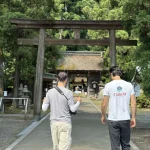

Every year, thousands of walkers arrive in Japan’s Kii Peninsula to follow the Kumano Kodo — the thousand-year-old network of pilgrimage trails that leads to the three grand shrines of Kumano. Most of them walk the same route: the Nakahechi. Far fewer know that there is another way in — the Iseji, a coastal route that begins at Ise Jingu, Japan’s most sacred Shinto shrine, and winds south over stone-paved mountain passes with the Pacific Ocean glittering below.
Both routes are part of the same UNESCO World Heritage listing. Both end at the sacred sites of Kumano. But they offer very different journeys — and choosing between them is the single most important decision you will make when planning a Kumano pilgrimage. Here is an honest comparison from a team that walks both.
What the Two Routes Share
The Kumano Kodo is not a single trail but a web of routes that converge on the Kumano Sanzan — the three grand shrines of Hongu Taisha, Hayatama Taisha, and Nachi Taisha. For over a thousand years, emperors, aristocrats, monks, and ordinary farmers walked these paths seeking purification and rebirth. In 2004, the routes were inscribed as a UNESCO World Heritage Site — one of only two pilgrimage trails in the world to hold the honor, alongside the Camino de Santiago.
Whichever route you choose, you will walk beneath towering cedar forests, pass moss-covered stone statues of Jizo, and finish at shrines that have been objects of devotion since before written history. The difference lies in how you get there — and who you meet along the way.
The Nakahechi: The Imperial Route
The Nakahechi is the route most people mean when they say “Kumano Kodo.” Beginning near the town of Tanabe on the peninsula’s west coast, it crosses the mountains inland to Hongu Taisha over roughly 40 kilometers of well-maintained trail, usually walked in two to three days. This was the path of retired emperors who made the pilgrimage from Kyoto in the Heian period, and it remains the best-developed route today: English signage is excellent, luggage shuttles run daily, and family-run guesthouses appear at comfortable intervals.
That accessibility is the Nakahechi’s greatest strength — and its weakness. In the October and November high season, you will share the trail and the guesthouses with walkers from around the world. Accommodation in villages like Chikatsuyu books out months ahead. It is still a beautiful, deeply moving walk. But if your image of a pilgrimage is solitude, the Nakahechi in peak season may surprise you.
The Iseji: The Pilgrim’s Coast
The Iseji takes the opposite corner of the peninsula. It runs roughly 170 kilometers from Ise Jingu — the spiritual heart of Japan, rebuilt every twenty years for the past thirteen centuries — down the eastern coast to Kumano. Historically, this was the common people’s route: pilgrims would first pay respects at Ise, then continue south to Kumano, linking the two holiest destinations in the country in a single journey.
The walking here is different in character. The trail climbs a series of stone-paved passes — Tsuzurato-toge, with its first breathtaking view of the sea; Magose-toge, whose moss-covered cobblestones run through a hinoki cypress forest; and Yakiyama, the longest and wildest crossing, once feared by pilgrims as the haunt of bandits and wolves. Between the passes, the route descends into fishing ports and farming villages where daily life continues much as it has for generations — and where a foreign walker is still a welcome novelty rather than part of the scenery.
Crowds are simply not a factor. On many sections of the Iseji, you can walk a full day of stone stairways, bamboo groves, and ocean lookouts and meet no one but local farmers. The trade-off: English infrastructure is thinner, accommodation is scarcer and simpler, and connecting the sections requires local knowledge of trains and buses. It is the route for walkers who want the Kumano of a century ago — and it rewards those who come prepared, or come guided.
Side by Side
| Nakahechi | Iseji | |
|---|---|---|
| Character | Forested mountain route, village to village | Coastal route: stone passes, sea views, fishing towns — with farming villages too, so you get both sea and mountains |
| Story | Walked by Heian-period aristocrats | Walked by Edo-period commoners |
| Crowds | Busy in spring and autumn | Quiet year-round |
| Typical length | 2–3 days (Takijiri to Hongu) | 4–7 days for the highlights; up to 2 weeks in full |
| Difficulty | Moderate, occasionally demanding. Over two days from Takijiri to Hongu, the second day (Chikatsuyu–Hongu) runs long; continuing past Hongu to Nachi adds two more days, and the Ogumotori-goe on day four is a long, tough climb. Paths throughout are very well maintained. | Easy to moderate. The stone paving has been excavated and beautifully preserved, with some long stairways. Walking all 170 km takes many days, but the highlight passes alone do not — trains, buses, or (pricier) taxis link the sections. |
| English signage & services | Excellent | Limited |
| Starts from | Tanabe (2 hrs from Osaka) | Ise (90 min from Nagoya) |
| Winter | Walkable except in heavy snow; chain spikes reassuring if snow lies | Very mild — snow does not settle, so walkable in winter with no special gear |
| Best for | First-time walkers, self-guided trips, those who want a little physical challenge | Solitude seekers, easier hiking, second visits, guided journeys |
So Which Route Is Right for You?
Choose the Nakahechi if this is your first long-distance walk in Japan, you prefer to travel self-guided, and you enjoy the camaraderie of an international trail. It is deservedly popular, and the infrastructure makes it one of the easiest multi-day walks in the country to organize on your own. Just be aware that the Chikatsuyu–Hongu stretch is long, and if you carry on from Oguchi to Nachi, the Ogumotori-goe is a sustained climb worth preparing for.
Choose the Iseji if you want to begin your pilgrimage at Ise Jingu the way pilgrims have for centuries, you would rather share the trail with herons than with tour groups, and you like the idea of finishing a mountain pass and descending into a fishing village for the freshest seafood of your life. The Iseji asks a little more of you — and gives back a Japan that most visitors never see. And if you only have time for a few of its highlight passes, their quiet beauty alone will win you over.
Many seasoned walkers do both — and if you do, it is worth thinking about which end you start from. Walk the Nakahechi first and then the Iseji, and you will face the long climb of the Ogumotori-goe on the way from Hongu toward Nachi; walk the route in the opposite direction and that same ascent becomes a descent.
There is also a story worth knowing. Edo-period pilgrims paid their respects at Ise Jingu first and only then set out for Kumano — in part to reach another pilgrimage entirely, the Saigoku Sanjusankasho circuit of thirty-three temples, which the Iseji fed into. Because their route always ran from Ise toward Kumano, some local people still consider walking it the other way improper. So if you want to walk it as the connoisseurs do, go from Ise toward Kumano — and from there, one fine option is to keep walking from Nachi to Oguchi, Hongu, and Chikatsuyu, finishing in Tanabe.
Walking the Iseji with Heartland Japan
The Iseji is our home ground. Our guided 7-day journey begins with a purification visit at Ise Jingu and follows the pilgrim’s coast over Nisaka-toge, Magose-toge, and Yakiyama to the grand shrines of Kumano — with local guides, inns chosen for their hospitality, and, just as on the Nakahechi, a luggage-transfer service so your suitcase travels ahead. Everything is handled, so you can simply walk.
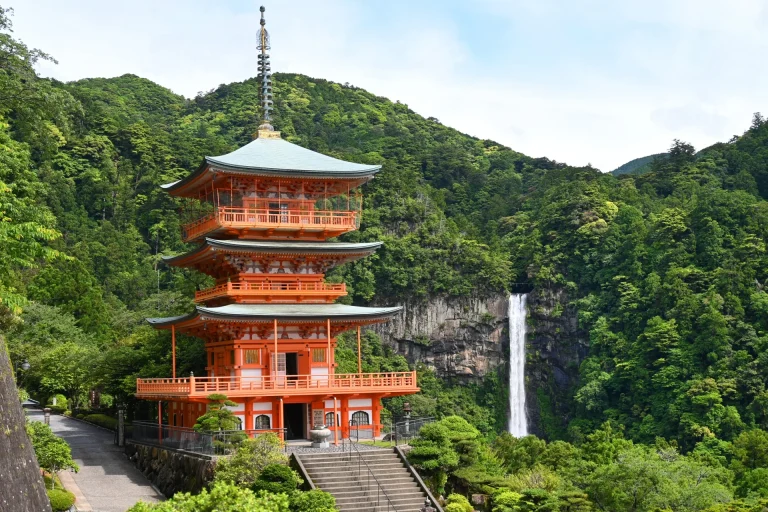
Our guided 7-day Iseji & Kumano Kodo spiritual walk — from ¥590,000:
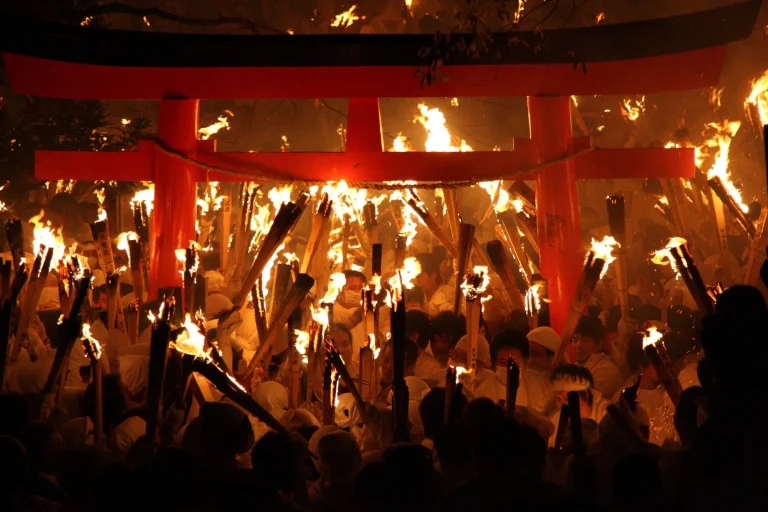
If your timing is right, consider pairing the walk with the Oto Matsuri, the 1,400-year-old fire festival held each February in Shingu — from ¥170,000:
Read More About the Iseji
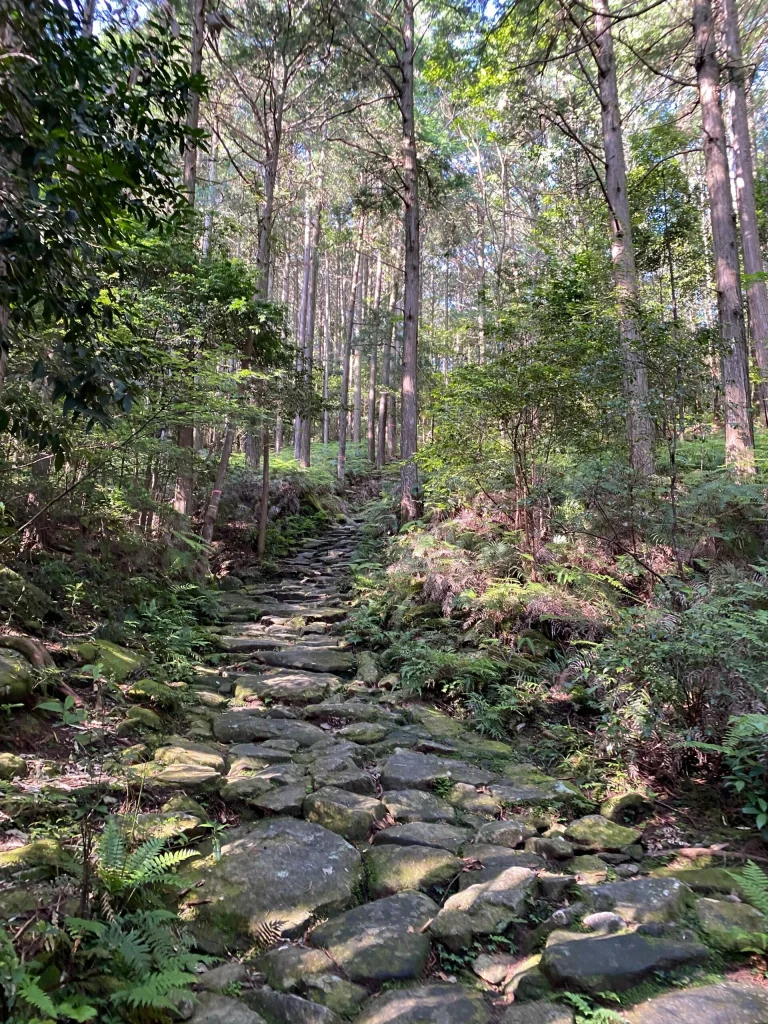
We documented the full route in our four-part walking series, beginning at Ise Jingu:
Frequently Asked Questions
Do I need a guide to walk the Kumano Kodo Iseji?
You can walk individual passes on your own, but the Iseji has far less English signage than the Nakahechi, and linking its sections means relying on infrequent local trains and buses. Some international walkers do complete the whole route solo — but if you want to cover a compact section in limited time, or would rather not wrestle with sparse signage and thin transport, a guided tour is the easier choice. A guide also unlocks the stories, shrines, and village encounters you would otherwise walk straight past.
How difficult is the Iseji route?
Easy to moderate. The stone-paved passes involve sustained stair climbing — Yakiyama is the longest, a full day with around 854 metres of ascent — but any reasonably fit walker who exercises regularly can complete them. Our guided itineraries build rest around the hardest crossings and keep daily distances manageable. Among the best-loved highlight passes are Magose-toge (2–3 hours) and Matsumoto-toge (2 hours). For something rarer, the Hongu-do — part of the wider Iseji — climbs gently over Tori-toge to the scenic Maruyama Senmaida rice terraces, and is well worth seeking out.
When is the best season to walk the Kumano Kodo?
Spring (March–May) and autumn (October–November) are ideal on both routes. The Iseji holds a quiet advantage in winter: its coastal climate stays mild, snow does not settle, and the trails are all but empty. Midsummer is humid everywhere in Japan — but on the Iseji you can at least walk with a cooling sea breeze.
Can I visit both Ise Jingu and Kumano in one trip?
Yes — that is precisely what the Iseji was built for. Pilgrims have linked Japan’s two holiest destinations along this coast for centuries, and our 7-day guided walk follows the same arc, from purification at Ise to the grand shrines of Kumano.
Which Kumano Kodo route is least crowded?
The Iseji, by a wide margin. Even in the October–November peak, most Iseji passes see only a handful of walkers a day, compared with the steady international stream on the Nakahechi.